Hi All
How was your New Years Day? First of all, I'm sorry for my absence from this blog. I was so busy on my business that I missed to post to this for many months.
I was very interested in the US President election last year and I guessed that Clinton would win in it. So, I was surprised to hear Obama's victory. Then I wanted to hear his inaugural address. I had waited for it, but I missed it. Because he spoke at 2 am in our time and I was beaten by my sleepiness. As a result, I could listen to it on VOA web.
I thought that he spoke to all American, so it would be very understandable. However I couldn't understand most of them at first time. He spoke very clearly and modulated his voice for effect. I listed to it three time by today. Yet I don't think that I understand his speech.
I found that his speech appeared in our news papers in English with its translation. I got a copy of it yesterday. I'm going to study his speech as teaching materials. Because I was impressed by it and I could have its audio, its prints and its translation.
Regards,
Sadamu
Monday, January 26, 2009


Monday, January 05, 2009
Myrtle Hill
Everybody How are you!
Let me to take advantage of this the opportunity.
To wish everybody have a wonderful New Year 2009 ,
to be joyful and health forever.
Let's us carry on our tour
Approaching Myrtle Path Turning south from the Chinese Timber Architecture Gallery, We enter the Myrtle path. The Myrtle Hill On the right hand side are myrtle trees and a number of Black pines with extending branches are grown on the Spring Hill to the leftAlong the Myrtle Path, the roadsides are planted mainly with and some Luohan Pines on the right.


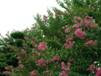
Myrtle flowers come in many colors-red、light purple、pink、purple blue or white. The flowers have a long blooming period of half a year normally from March to July. During Tang Dynasty, Myrtles were grown mostly in palaces and official residences


Luohan Pines ( Podocarpus macrophyllus) is a conifer in the genus Podocarpus, it is the northernmost species of the genus, native to southern Japan and southern China. Kusamaki and Inumaki are Japanese names for this tree, and Kusamaki is increasingly being used as the English name as well, replacing the old, botanically inaccurate names "buddhist pine" and "fern pine" (it is not a pine). In China, it is known as Luohan Pines..

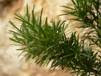


It is a small to medium size evergreen tree, reaching 20 m tall. The leaves are strap-shaped, 6-12 cm long, and about 1 cm broad, with a central midrib. The cones are borne on a short stem, and have 2-4 scales, usually only one (sometimes two) fertile, each fertile scale bearing a single apical seed 10-15 mm. When mature, the scales swell up and become reddish purple, fleshy and berry-like, 10-20 mm long; they are then eaten by birds, which disperse the seeds in their droppings. The yew podocarpus growth speed is slow, 8 to 10 year beginning long height 1 meter, 4 meter high yew podocarpus then take time generally for 40 years, this is precisely its precious place.
Kusamaki is the state tree of Chiba Prefecture, Japan.
It is a popular large shrub or small tree in gardens, particularly in Japan and the southeastern United States. The ripe cone arils are edible, though the seed should not be eaten.
Luohan Pines in Hong Kong is regarded as a Fung Shui tree, thus having a very high market value. In recent years, the illegal digging of Buddhist Pine has become a problem in the city.
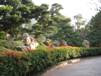
On the left stand a number of arresting Black Pines.
Black Pine trees in outstanding shape, two of which is like a pair of “opening arms” to welcome tourists coming into the garden. Rocks are from the Red River in Guangxi province (foreign guests may be interested to know that Guangxi is the adjacent province and west of Gungdong!) and how they appear today is result of long years of natural erosion under water. In the coming future,we will have special part to introduce the rocks and more pictures for watching.
Wishing you and your beloved ones happiness, success and most important of all, the very best of health.
Bye Bye!
Let me to take advantage of this the opportunity.
To wish everybody have a wonderful New Year 2009 ,
to be joyful and health forever.
Let's us carry on our tour
Approaching Myrtle Path Turning south from the Chinese Timber Architecture Gallery, We enter the Myrtle path. The Myrtle Hill On the right hand side are myrtle trees and a number of Black pines with extending branches are grown on the Spring Hill to the leftAlong the Myrtle Path, the roadsides are planted mainly with and some Luohan Pines on the right.
Myrtle flowers come in many colors-red、light purple、pink、purple blue or white. The flowers have a long blooming period of half a year normally from March to July. During Tang Dynasty, Myrtles were grown mostly in palaces and official residences
Blooming flowers in winter time
Luohan Pines ( Podocarpus macrophyllus) is a conifer in the genus Podocarpus, it is the northernmost species of the genus, native to southern Japan and southern China. Kusamaki and Inumaki are Japanese names for this tree, and Kusamaki is increasingly being used as the English name as well, replacing the old, botanically inaccurate names "buddhist pine" and "fern pine" (it is not a pine). In China, it is known as Luohan Pines..
It is a small to medium size evergreen tree, reaching 20 m tall. The leaves are strap-shaped, 6-12 cm long, and about 1 cm broad, with a central midrib. The cones are borne on a short stem, and have 2-4 scales, usually only one (sometimes two) fertile, each fertile scale bearing a single apical seed 10-15 mm. When mature, the scales swell up and become reddish purple, fleshy and berry-like, 10-20 mm long; they are then eaten by birds, which disperse the seeds in their droppings. The yew podocarpus growth speed is slow, 8 to 10 year beginning long height 1 meter, 4 meter high yew podocarpus then take time generally for 40 years, this is precisely its precious place.
Kusamaki is the state tree of Chiba Prefecture, Japan.
It is a popular large shrub or small tree in gardens, particularly in Japan and the southeastern United States. The ripe cone arils are edible, though the seed should not be eaten.
Luohan Pines in Hong Kong is regarded as a Fung Shui tree, thus having a very high market value. In recent years, the illegal digging of Buddhist Pine has become a problem in the city.
On the left stand a number of arresting Black Pines.
Black Pine trees in outstanding shape, two of which is like a pair of “opening arms” to welcome tourists coming into the garden. Rocks are from the Red River in Guangxi province (foreign guests may be interested to know that Guangxi is the adjacent province and west of Gungdong!) and how they appear today is result of long years of natural erosion under water. In the coming future,we will have special part to introduce the rocks and more pictures for watching.

Wishing you and your beloved ones happiness, success and most important of all, the very best of health.
Bye Bye!
Friday, December 26, 2008
Merry Christmas and a Happy New Year


Hello everybody!! I wish you the best to all of you. As coming the new year all the wishes are achieve.
Ms Vanessa I want to do something for studing. Please when you'll have free time, tell us some ideas. I think is time to do something creative to fell better. I need to do something.
I'm sorry for my absence. I realise that I have to do something if I want to find myself again.
Thank you .
See you soon.
Happy New Year
Saturday, December 06, 2008
Tang architecture -bracket system
Hi Everybody let's carry on the tour!
Tang Dynasty timber complexes were mostly modeled on the traditional quadrangle courtyard design and buildings were arranged symmetrically along an axis.


bracket system is the most characteristic feature in Chinese monumental architecture. Its ingenious design evenly transfers the load of the beam frame and roof directly or indirectly to the columns.

Bracket with single layer

Bracket with muti-layers

Load from the bracket indirectly to the columns.


Tang architecture employed timber as its principal building material. Its structural system was post and beam construction, with the load of the beam frame and roof supported by the columns throught the bracket layers. The walls were merely erected to provide enclosure, seclusion and partition, thus allowing a high degree of flexibility in planning. The locations of doors and windows were not restricted by the walled enclosure.
next time will continue our tour in the garden.
Classmate RAjeev asked me a question that Somebody told me that Chinese language is still pictographic? Is it true?
As I knew, Chinese language has developed since few thousand years, part of the language was refer to the animals shape, Nature sceneries image..etc. Form this to develops the Chinese calligraphy art. I had just finished a 3 years diploma calligraphy course at extra-curricular in local university.
Herewith some simple sample for your understanding:-
Chinese Word : Sun

Wood

Mountain

To wish it cans help us to have some ideas of the Chinese words.
See you next time.
Bye!
Tang Dynasty timber complexes were mostly modeled on the traditional quadrangle courtyard design and buildings were arranged symmetrically along an axis.


bracket system is the most characteristic feature in Chinese monumental architecture. Its ingenious design evenly transfers the load of the beam frame and roof directly or indirectly to the columns.

Bracket with single layer

Bracket with muti-layers

Load from the bracket indirectly to the columns.


Tang architecture employed timber as its principal building material. Its structural system was post and beam construction, with the load of the beam frame and roof supported by the columns throught the bracket layers. The walls were merely erected to provide enclosure, seclusion and partition, thus allowing a high degree of flexibility in planning. The locations of doors and windows were not restricted by the walled enclosure.

next time will continue our tour in the garden.
Classmate RAjeev asked me a question that Somebody told me that Chinese language is still pictographic? Is it true?
As I knew, Chinese language has developed since few thousand years, part of the language was refer to the animals shape, Nature sceneries image..etc. Form this to develops the Chinese calligraphy art. I had just finished a 3 years diploma calligraphy course at extra-curricular in local university.
Herewith some simple sample for your understanding:-
Chinese Word : Sun

Wood

Mountain

To wish it cans help us to have some ideas of the Chinese words.
See you next time.
Bye!
Saturday, November 29, 2008
Ancient China_Architectures
Dear All
Today! I would like to introduce Timber Architectures, In ancient China, architectures can generally be categorized into “ting” (pavilion), “tai (terrace), “lou” (tower or house), “ge” (pavilion or tower), “xie” (house), “”xuan” (hall or house), “zhai” (study). There is “guan” (house or hall) and there are “lang” (verandahs) and “wu” (enclosed verandah). Generally speaking, a ting is an individual structure for people to have a short stay. When it is enclosed it becomes a Ge.
 may also be more than one storey. a terrace is a mound or a solid platform above the ground on which structures may be built. A lou
 is usually a multi-storeyed structure. It is not easy to distinguish a xie
 a xuan
 a zhai or a guan, however. They may be an individual structure or a group of structures in a complex. The usage may vary. They can be a place for people to read, to paint, to have tea, to entertain or to confer. There are no strict rules for their categorization and they are usually determined in accordance with people’s preferences.
Traditional Buildings in China were mostly constructed of natural materials such as clay, stone, and in particular, timber. Noted for its easy-to-work nature and structural flexibility, timber has been utilized to develop a unique style of architecture that is distinctively Chinese. Growing out of the earth, timber is symbolic of life and growth. It is exactly this symbolic meaning tha Chinese architecture embodies. Timber adds life to the monastic hall and evokes a feeling of harmony and unity with the cosmos.
 The tiled and gabled roof provides easy drainage for rain and snow, and the drip tiles of protruding eaves serve both practical and decorative functions. The other parts of the roof and the ridge can also be decorated with various kinds of ornament.
Next time, would like to introduce how to build and the speical structure - the Bracket System.
Meanwhile send my regard to Mata and all of us , let's never give up!
Good health.
Bye Bye!
Allun
Today! I would like to introduce Timber Architectures, In ancient China, architectures can generally be categorized into “ting” (pavilion), “tai (terrace), “lou” (tower or house), “ge” (pavilion or tower), “xie” (house), “”xuan” (hall or house), “zhai” (study). There is “guan” (house or hall) and there are “lang” (verandahs) and “wu” (enclosed verandah). Generally speaking, a ting
 is an individual structure for people to have a short stay. When it is enclosed it becomes a Ge.
 may also be more than one storey. a terrace is a mound or a solid platform above the ground on which structures may be built. A lou
 is usually a multi-storeyed structure. It is not easy to distinguish a xie
 a xuan
 a zhai or a guan, however. They may be an individual structure or a group of structures in a complex. The usage may vary. They can be a place for people to read, to paint, to have tea, to entertain or to confer. There are no strict rules for their categorization and they are usually determined in accordance with people’s preferences.
 Traditional Buildings in China were mostly constructed of natural materials such as clay, stone, and in particular, timber. Noted for its easy-to-work nature and structural flexibility, timber has been utilized to develop a unique style of architecture that is distinctively Chinese. Growing out of the earth, timber is symbolic of life and growth. It is exactly this symbolic meaning tha Chinese architecture embodies. Timber adds life to the monastic hall and evokes a feeling of harmony and unity with the cosmos.
 The tiled and gabled roof provides easy drainage for rain and snow, and the drip tiles of protruding eaves serve both practical and decorative functions. The other parts of the roof and the ridge can also be decorated with various kinds of ornament.
Next time, would like to introduce how to build and the speical structure - the Bracket System.
Meanwhile send my regard to Mata and all of us , let's never give up!
Good health.
Bye Bye!
Allun
Friday, November 28, 2008
Hello all!!
Hello Ms Vanessa and all classmates
I apologize for my long time absence but I am not very good. Actually I’m very in a badly situation. My psychologically problems are still exists. Times to times I visit our site, but I can’t think anything to write. I think I loose my mind sometimes. I have lost a lot of weight and my smile. I think that I’m lonely in this world. I want to leave permanently, far away from all, sometimes I want to die. I know that it’s terrible to say that bur I feel like this. 
I own to you writing assistant about an artist, but I can study for him now. I miss you all I really mean this. But for now I have to find myself. I have to find the old matoula.
I hope all you are well.
Sorry about this but I feel you my friends and I want to speak to a friend. I hope back to you again soon.

Take care, all of you!
I own to you writing assistant about an artist, but I can study for him now. I miss you all I really mean this. But for now I have to find myself. I have to find the old matoula.
I hope all you are well.
Sorry about this but I feel you my friends and I want to speak to a friend. I hope back to you again soon.
Take care, all of you!
Thursday, November 13, 2008
The West Hill
Hello! Everybody let us continues the tour.
Passing the Lands and Seas, Visitors come to a gentle uphill path and the West Hill is borders the flyover highways on the west. Evergreen plants on the hill include Chinese Mahonia, Luohan Pines, Indian Canna and others. The hill, plants and sound-proof barriers have the function of blocking out outside scenes and maintaining tranquility of the Garden.
West Hill


End of the path the Chinese Timber Architecture Gallery in Tang designed is located there, here have some of the most representative examples of fine timber structures in China still in existence today. These include the pavilion, terrace, tower, verandah, hall and study room. They represent different types of traditional architectures in ancient China.Remind guests that photography is not allowed inside.
Chinese Timber Architecture Gallery


Next time we will introduce the traditional architectures in ancient China for review.
Good luck! See you soon.
Passing the Lands and Seas, Visitors come to a gentle uphill path and the West Hill is borders the flyover highways on the west. Evergreen plants on the hill include Chinese Mahonia, Luohan Pines, Indian Canna and others. The hill, plants and sound-proof barriers have the function of blocking out outside scenes and maintaining tranquility of the Garden.
West Hill


End of the path the Chinese Timber Architecture Gallery in Tang designed is located there, here have some of the most representative examples of fine timber structures in China still in existence today. These include the pavilion, terrace, tower, verandah, hall and study room. They represent different types of traditional architectures in ancient China.Remind guests that photography is not allowed inside.
Chinese Timber Architecture Gallery


Next time we will introduce the traditional architectures in ancient China for review.
Good luck! See you soon.
Subscribe to:
Posts (Atom)
